Why kindness after trauma can cost you, and how to keep it without losing yourself
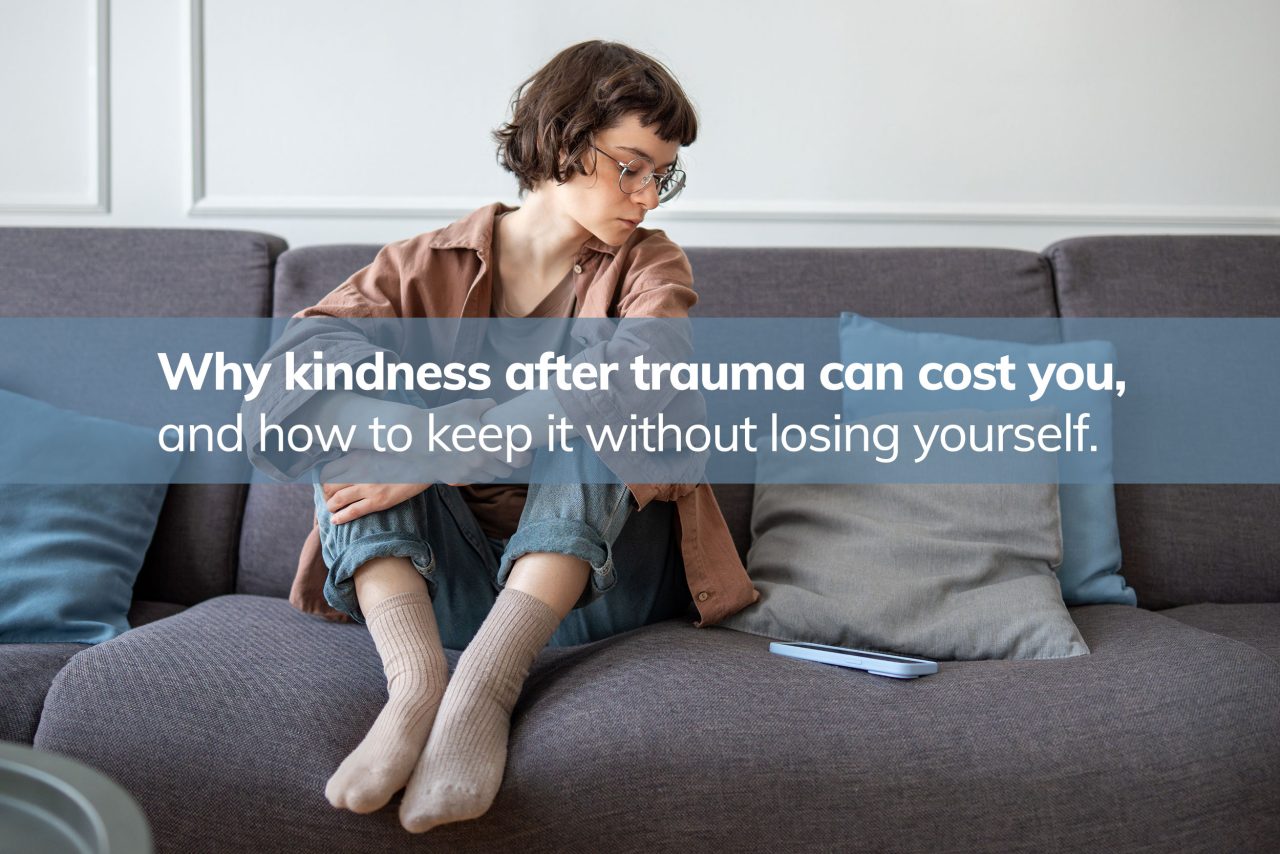
You’re the one people call. You notice when a coworker goes quiet, you remember the hard anniversaries, you show up with food before anyone asks. Friends say you’re the kindest person they know.
What they may not know is where that kindness came from. For many people, it wasn’t learned from being treated gently. It was learned the hard way – by knowing exactly what it feels like to be hurt, lonely, or overlooked, and deciding no one else should feel that if you can help it.
That kind of kindness is real, and it’s a strength. It can also quietly cost you more than you realize.
Why trauma can make people kinder
When you grow up or live through a period where you feel unsafe, unseen, or alone, your brain gets very good at one thing: reading other people. You learn to spot a shift in someone’s mood before they say a word. You learn what calms a room down. You learn what it costs to be ignored.
That skill doesn’t go away when the hard period ends. It becomes part of how you move through the world. Many people take that hard-won awareness and turn it outward – they give others the patience, attention, and gentleness they never received.
Psychologists sometimes call this post-traumatic growth: real, positive change that some people experience after a painful event. It doesn’t erase what happened, and it doesn’t mean the pain was “worth it.” It means you built something from it. That deserves credit, not suspicion.
When kindness starts to cost you
Here’s the catch. Kindness that grew out of survival often comes with a rule attached: other people’s needs come first, always. That rule kept you safe once. Now it may be running your life without your permission.
Some signs the balance has tipped:
- You say yes before you’ve checked whether you have the time, energy, or money.
- Saying no feels uncomfortable.
- You feel responsible for everyone’s mood in the room.
- You’re exhausted, but resting feels selfish.
- You give generously and then feel a flash of resentment you’re ashamed of.
- You’re not sure what you actually want, because you’re always tracking what others want.
None of this makes you a “people pleaser” in the dismissive sense. It makes you someone whose nervous system learned that being needed was the same as being safe. The kindness is still yours. The fear underneath it is what’s worth looking at.
Four ways to keep your kindness without giving yourself away
The goal is not to become less kind. It’s to make kindness a choice instead of a reflex.
- Pause before you say yes. Try a simple line: “Let me check and get back to you.” It buys you a few minutes to ask whether you actually have the capacity. If the pause itself feels scary, notice that — it’s useful information.
- Turn the kindness around. Ask what you’d say to a friend in your exact situation. Then say it to yourself. Most people who learned kindness through pain are much gentler with others than with themselves.
- Practice one small no a week. Start low-stakes: a meeting you don’t need to attend, a favor you’d rather not do. The point is to let your body learn that nothing terrible happens when you set a limit.
- Name the feeling under the urge to help. Sometimes it’s warmth. Sometimes it’s fear of being disliked, or an old habit of keeping the peace. You don’t have to act differently right away – just knowing which one is driving changes things over time.
When it’s time to talk to someone
Plenty of people manage this on their own, and the steps above can help. But consider reaching out to a therapist if:
- The exhaustion or resentment has lasted weeks or months, not days.
- You’re having trouble sleeping, concentrating, or enjoying things you used to.
- Old memories or feelings are showing up more often, or more intensely, than they used to.
- Setting even a small boundary brings on panic, guilt, or shutdown.
- Relationships keep following the same painful pattern.
Therapy for trauma isn’t about reliving the worst of it or being told what to do. It’s a steady, confidential space with a licensed human therapist who helps you understand your patterns, sort out what’s yours to carry, and build a version of kindness that includes you. At BCS Group, every client works with a licensed social worker or psychologist – a real person who listens, not an app or a chatbot.
You don’t have to carry it alone
If the weight of always being the strong, kind one has been affecting your daily life, talking to a professional can help. BCS Group offers individual, couples, family and group therapy online across New York State and New Jersey. Medicaid, Medicare and most insurance accepted. Call (718) 313-4357 to schedule an appointment.