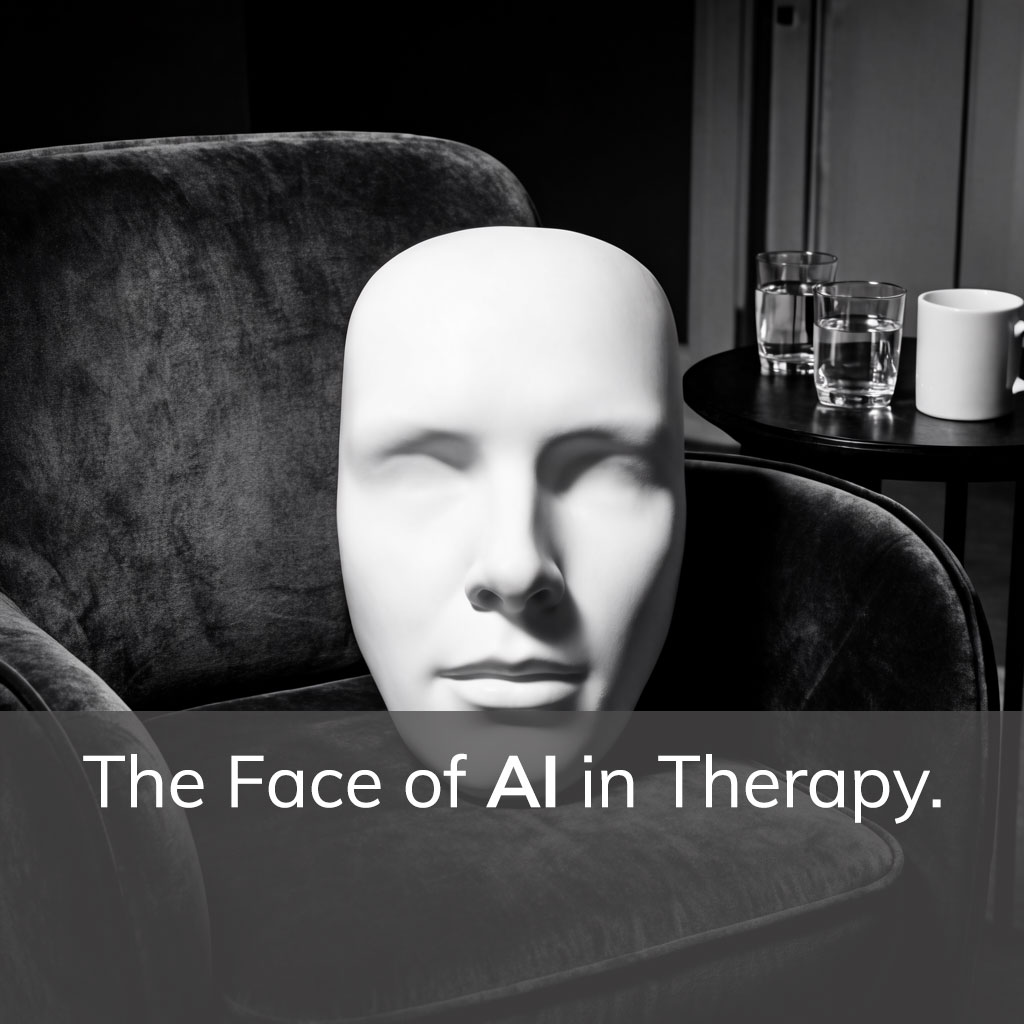
The Face of AI in Therapy
There is an app for almost everything now, and increasingly there is an app for feeling better. Type your worries into a box at two in the morning and something types back – calm, patient, endlessly available, never tired, never late, never on holiday.
It is easy to see the appeal. It is also easy to mistake it for therapy.
What a therapist is actually doing
When you sit down with a counsellor, you probably assume the work is in the words. It isn’t, or at least not mostly.
A trained therapist is reading the pause before you answer. The way your shoulders climb towards your ears when a particular name comes up. The laugh that arrives half a beat too fast. The fact that you said “fine” but your hands didn’t. The subject you circle three times without ever landing on it.
Much of what matters in a therapy room is never spoken aloud. It’s carried in tone, in posture, in breath, in the things left out. Therapists spend years learning to notice this, and years more learning what to do with it – when to name it gently, when to sit with it, when to leave it alone entirely because you’re not ready and pushing would cost you something.
An AI has none of this. It has your typed words and nothing else. It cannot hear you. It cannot see you. It has no idea that your voice went thin when you mentioned your mother.
Attunement isn’t a feature
The relationship between a client and a counsellor is not the packaging around the therapy. Decades of research point the same direction: the quality of that relationship is one of the strongest predictors of whether therapy helps at all. It matters more than the particular model or technique.
That relationship is built on something called attunement – one nervous system responding to another. Being genuinely met by a person who is affected by what you tell them. Feeling, often for the first time, that someone can hear the worst of it and stay in the room with you.
A language model can produce sentences that resemble empathy. It cannot be moved by you. It doesn’t remember you between conversations in any way that means anything. It has no stake in whether you’re alright next Tuesday. The words may land warmly, but there is nobody behind them.
Being understood by a person and being processed by a system are not the same experience, and something in us knows the difference.
Where it can go wrong
There is a quieter risk too. AI is built to be agreeable. It tends to reflect you back to yourself, smoothed and validated.
A good therapist doesn’t only comfort. Sometimes they notice a pattern you’d rather not look at, and they say so – carefully, at the right moment, having earned the trust to do it. That gentle challenge is often where the actual change happens. Nothing that is designed to keep you engaged will risk it.
And when someone is genuinely in crisis, a chatbot cannot judge risk, cannot see the state you’re in, and cannot make the human decision to slow down, stay with you, and make sure you’re safe.
The honest part
None of this means technology has no place. Apps can help with mood tracking, breathing, journaling between sessions, or getting a first foothold when someone isn’t ready to speak to anyone yet. That’s genuinely useful, and for people facing long waiting lists it may be better than nothing at all.
But it’s a supplement, not a substitute. It’s the difference between a first aid kit and a doctor.
At BCS Counselling Group
Every person you speak to here is a human being. Trained, qualified, and properly present – noticing the tone, the pause, the small things, and staying with you through them. Therapy works because of the relationship. That has never been something you can automate.
If you’d like to talk to someone real, get in touch.
New Appointments: 718 313 HELP (718 313 4357)