
Venting to a chatbot? Here’s what it can’t do
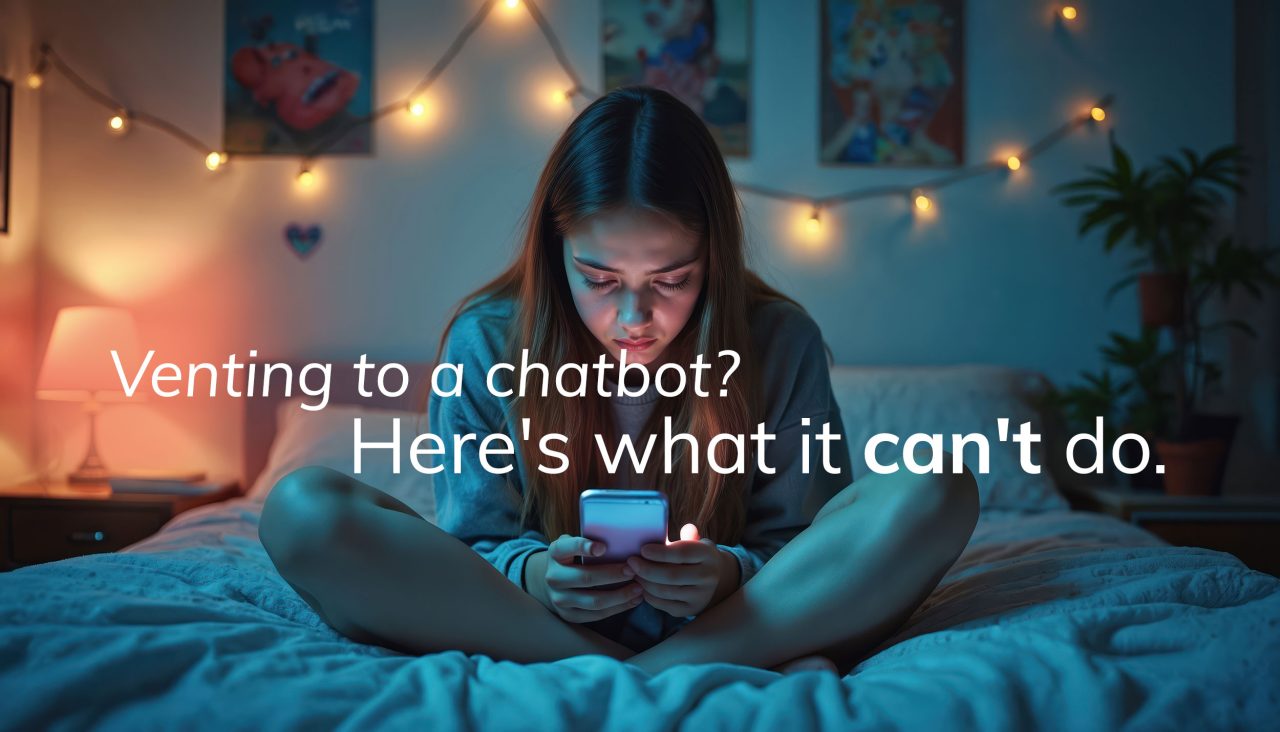
You can’t sleep, your chest is tight, and the thought of texting a friend feels like too much. So you open a chatbot and type it all out. It answers right away.
It doesn’t judge. It doesn’t get tired of you.
If that sounds familiar, you’re not alone, and you’re not doing anything wrong. Young adults are turning to AI for emotional support more than any other group, and it makes sense. It’s free, it’s instant, and it’s there when no one else is. But a lot of people end up asking the same question: AI chatbot vs. therapist – what’s the actual difference, and when does venting stop being enough?
Why so many people are talking to AI
If you’re in your twenties or early thirties, you probably know more about mental health than any generation before you. You can name anxiety, burnout, and a trauma response. Knowing the words, though, doesn’t make the feelings lighter.
At the same time, a lot of things are stacked against you. Rent and groceries eat most of a paycheck. Work bleeds into nights and weekends. Friendships that used to be automatic now take planning, and many people feel lonelier than they let on. Therapy can seem expensive, slow to get into, or just one more thing to figure out.
So you reach for what’s closest. A chatbot asks nothing of you. That’s the appeal, and it’s also the limit.
What a chatbot does well
Let’s be fair to it. Writing out what you feel, even to a screen, can take the edge off a hard night. Putting a messy feeling into words is a real skill, and AI gives you a place to practice it with zero pressure.
It can also help you get organized. If you’re nervous about a conversation, it can help you draft what to say. If you don’t know what you’re feeling, it can hand you some vocabulary. For a lot of people, that’s a useful first step.
AI chatbot ‘v’ therapist: what it can’t do
A chatbot responds to what you type. A therapist responds to you. That difference matters more than it sounds.
- It can’t notice what you leave out. A licensed therapist hears the pause before you answer, the topic you keep circling, the thing you joke about every week. Those are often where the real work is. A chatbot only knows what you decide to tell it.
- It doesn’t carry you from one week to the next. Therapy builds. Your therapist remembers what you tried last month, what worked, and what you promised yourself you’d do differently. A chat window starts fresh, so the same conversation keeps repeating.
- It won’t push back. Chatbots are built to keep you comfortable, so they tend to agree with you. A good therapist cares about you more than about your comfort in the moment. Sometimes the most helpful thing someone can say is, “I don’t think that’s the whole story.”
- It isn’t accountable. No license, no training in your specific situation, no responsibility if the advice is wrong. When you work with BCS, you work with a licensed social worker or psychologist, a real person whose job is to pay attention to you. Not an app, not a script.
None of this makes the chatbot bad. It makes it a place to let off steam, not a plan for getting better.
Three signs you’ve outgrown the chatbot
This isn’t a diagnosis. It’s a gut check.
- You keep typing the same thing. If you’ve explained the same problem to a chatbot five different ways and nothing in your life has shifted, you don’t need more words. You need a different kind of help.
- It’s replacing people, not adding to them. Notice if you’d rather open the app than text a friend, or if you’re skipping plans to stay home and talk to it. Feeling understood by software is easier than being known by a person. Easier isn’t always better.
- You feel calmer for an hour, then worse. Typing it out releases pressure. It doesn’t change the thing causing it. If the relief keeps getting shorter, that’s information.
One more thing you can try tonight: before you open the chatbot, write down one sentence about what you actually want to be different. Not how you feel, what you want. That sentence is a great place to start a first session.
When it’s time to talk to ‘a real person’
You don’t have to hit rock bottom to deserve support. But a few things are worth taking seriously:
- The low mood, worry, or numbness has lasted more than a couple of weeks.
- It’s getting in the way of work, school, sleep, or the people you care about.
- You’re handling it with things that make tomorrow harder, like drinking, isolating, or not eating.
- You’ve thought about hurting yourself, even in passing.
If any of those land, it’s time. And if the cost is what’s stopped you, know this: BCS Group accepts Medicaid, Medicare, and most insurance, and every session is online. No commute, no waiting room, just a licensed therapist on a screen you already own.
Ready when you are
If stress, anxiety, or loneliness has been affecting your daily life, talking to a professional can help. BCS Group offers individual, couples, family and group therapy online across New York State and New Jersey. Medicaid, Medicare and most insurance accepted. Call (718) 313-4357 to schedule an appointment.