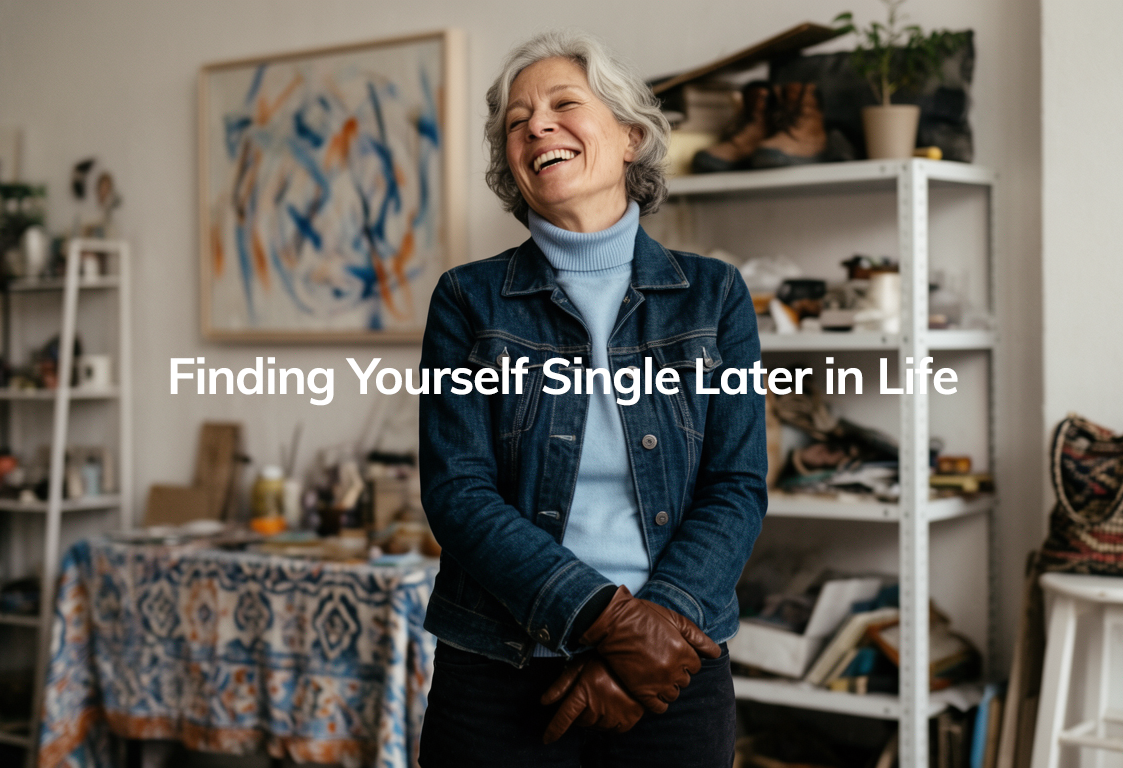
There is a unique kind of silence that can arrive later in life when a long-term relationship ends, a spouse passes away, or life simply unfolds differently than expected. For many people, finding themselves single in their 50s, 60s, 70s, or beyond can feel both unfamiliar and unsettling. The future they imagined may suddenly look different, leaving them questioning who they are and what comes next.
Yet while this chapter often begins with loss, uncertainty, or loneliness, it can also become one of the most transformative periods of personal growth.
The Emotional Reality of Starting Over
Becoming single later in life is rarely just about changing relationship status. It often involves grieving a shared history, adjusting daily routines, and redefining a sense of identity.
Many people have spent decades as someone’s partner, spouse, caregiver, or companion. When that role changes, it is common to experience emotions such as:
- Sadness and grief
- Anxiety about the future
- Loneliness and isolation
- Fear of aging alone
- Loss of confidence
- Uncertainty about purpose
These feelings are not signs of weakness. They are natural responses to significant life transitions. Mental health professionals often emphasize that grief is not limited to death; it can also accompany divorce, separation, and major life changes.
Allowing yourself to acknowledge these emotions rather than suppress them is often the first step toward healing.
Rediscovering Who You Are
One of the greatest challenges – and opportunities – of being single later in life is rediscovering yourself outside of a relationship.
Many people realize that over the years, their personal interests, goals, and dreams were placed on hold while careers, children, caregiving responsibilities, or partnerships took center stage.
Now, there is an opportunity to ask important questions:
- What brings me joy?
- What have I always wanted to learn?
- What passions have I neglected?
- Who am I when I am not defined by someone else’s needs?
These questions can feel intimidating at first, but they also open the door to renewed self-awareness and personal freedom.
Reframing Loneliness
Loneliness is one of the most commonly reported struggles among older adults who find themselves single. However, there is an important distinction between being alone and feeling lonely.
Being alone can provide space for reflection, creativity, and personal growth. Loneliness, on the other hand, is a painful feeling of disconnection.
Building meaningful connections can help bridge that gap. This does not necessarily mean seeking another romantic relationship. Friendships, volunteer work, community groups, faith organizations, clubs, and family relationships can all provide valuable emotional support.
Human connection comes in many forms, and a fulfilling life is not dependent on having a romantic partner.
Challenging Society’s Expectations
Modern culture often promotes the idea that happiness is tied to being coupled. As a result, many people who are single later in life feel pressure to “find someone” as quickly as possible.
But fulfillment does not come from relationship status alone.
Research consistently shows that emotional well-being is more closely linked to factors such as social support, purpose, physical health, and self-acceptance than whether someone is married or single.
There is no deadline for finding love, and there is equally no requirement to seek it if you are content on your own.
Caring for Your Mental Health
During major life transitions, self-care becomes especially important. Mental wellness is not about avoiding difficult emotions; it is about developing healthy ways to navigate them.
Helpful strategies include:
- Prioritize Physical Health
- Regular exercise, adequate sleep, and balanced nutrition significantly influence mood and emotional resilience.
- Stay Connected
- Even small social interactions can reduce feelings of isolation. Reach out to friends, family members, or community groups.
- Seek Professional Support
- Therapists and counselors can help process grief, rebuild confidence, and navigate life changes.
- Practice Self-Compassion
- Avoid comparing your journey to others. Speak to yourself with the same kindness you would offer a close friend.
- Explore New Experiences
- Taking a class, traveling, volunteering, or pursuing a hobby can reignite curiosity and create a renewed sense of purpose.
Embracing the Possibility Ahead
Finding yourself single later in life is not a failure, nor is it the end of your story. It is simply a new chapter – one that may offer unexpected opportunities for growth, healing, and self-discovery.
Many people discover that the second half of life brings a deeper understanding of themselves than they ever had before. They learn to enjoy their own company, cultivate meaningful relationships, and pursue passions that had long been forgotten.
While the path may not look the way you once imagined, it can still be rich with connection, purpose, and joy.
Being single later in life is not about what has been lost. It is also about what can still be found – especially yourself.